Why Leave-On Treatments Matter for Long-Term Skin and Hair Results

Why Leave-On Treatments Matter for Long-Term Skin and Hair Results
Cleansers are essential.
Shampoos are essential.
But cleansing and treatment are not the same thing.
Rinse-off products are designed primarily to remove substances from the skin, scalp or hair: oil, sweat, pollution, makeup, styling residues and accumulated debris.
They may also contain beneficial active ingredients, and some rinse-off treatments can provide meaningful effects.
But for many long-term cosmetic objectives — such as antioxidant support, hydration, barrier care, scalp conditioning or targeted active delivery — contact time becomes an important part of formulation design.
That is where leave-on products have a different role.
Rinse-Off and Leave-On Products Solve Different Problems
A well-designed routine does not need to choose between cleansing and treatment.
It needs both.
A rinse-off product may be designed to:
-
cleanse the skin or scalp
-
remove excess sebum
-
remove pollutants and makeup
-
exfoliate
-
reduce buildup
-
condition hair
-
deliver selected short-contact actives
A leave-on product may instead be designed to:
-
remain in contact with skin or scalp for longer
-
provide ongoing hydration
-
deliver antioxidants
-
support barrier comfort
-
provide targeted scalp treatment
-
supply multiple complementary actives
-
enable repeated daily exposure
These are fundamentally different formulation objectives.
The question is not:
“Which format is better?”
It is:
“Which format is more appropriate for the function we want the product to perform?”
Why Contact Time Matters
When a cleanser or shampoo is applied, it may remain on the skin or scalp for only a short period before being rinsed away.
A leave-on formulation behaves differently.
It can remain on the treatment area for hours.
This longer residence time gives the formulation more opportunity to:
-
distribute over the treatment area
-
interact with the skin or scalp surface
-
release incorporated ingredients
-
maintain hydration
-
provide continued emollient or humectant support
Longer contact does not automatically guarantee greater penetration or greater efficacy.
Delivery still depends on the ingredient, formulation, concentration, skin condition and many other factors.
But when a product is designed around ongoing skin interaction, a leave-on format often provides a more logical vehicle.
Cleansing Is Still Part of Treatment
It would be a mistake to treat cleansing as unimportant.
A well-designed cleanser can contribute substantially to skin and scalp condition.
For example, cleansing can help remove:
-
excess sebum
-
environmental particulates
-
oxidised surface lipids
-
sunscreen residues
-
makeup
-
sweat
-
styling products
For the scalp, effective cleansing can also help control buildup around the hair and follicular openings.
This prepares the surface for whatever treatment follows.
A useful way to think about the relationship is:
Cleanse → Prepare → Treat → Protect
rather than seeing cleansing and treatment as competing philosophies.
Why Rinse-Off Actives Can Be Limited by Exposure Time
Some ingredients work very effectively in rinse-off formulations.
Others are better suited to prolonged contact.
Imagine an antioxidant, humectant or cellular-support ingredient incorporated into a cleanser.
The ingredient may be present at an appropriate concentration, but much of the formulation is removed with water shortly after application.
By comparison, incorporating that same class of ingredient into a well-designed leave-on product creates a different exposure profile.
The formulation remains present.
That distinction becomes particularly relevant when the objective is continued cosmetic support rather than immediate cleansing.
Leave-On Treatment and Skin Hydration
Hydration provides a good example.
A cleanser can be formulated to minimise disruption of the skin barrier and can contain humectants or conditioning ingredients.
That is valuable.
But prolonged hydration is generally better addressed by a product designed to remain on the skin.
A leave-on formulation can continuously provide ingredients such as:
-
sodium PCA
-
sodium lactate
-
betaine
-
panthenol
-
trehalose
-
ectoine
-
glycerin
-
suitable emollients
These ingredients can remain associated with the skin after application rather than being substantially removed during rinsing.
This is why hydration is usually considered a leave-on treatment function.
Antioxidants Also Benefit From Appropriate Formulation
Antioxidants are another good example.
Ingredients such as:
-
Vitamin C derivatives
-
Coenzyme Q10
-
tocotrienols
-
ferulic acid
-
resveratrol
-
quercetin
-
green-tea polyphenols
are commonly incorporated into advanced skincare.
But antioxidant performance depends on more than simply including the ingredient.
The active must remain sufficiently stable in the product and be appropriately presented to the skin.
For many antioxidant strategies, a leave-on serum, SkinMist or lotion provides a more logical delivery format than a product removed after a short cleansing period.
The Same Principle Applies to the Scalp
The distinction between cleansing and treatment becomes particularly important in haircare.
Shampoo performs an essential role:
clean the scalp and hair.
But the hair follicle is a living biological structure located within scalp tissue.
If the objective is to provide ingredients to the scalp and follicular environment, a short-contact shampoo is not always the most practical treatment vehicle.
This is why modern scalp routines increasingly include leave-on products such as:
-
HairSerums
-
HairMists
-
scalp tonics
-
lightweight treatment fluids
These products can remain in contact with the scalp rather than being immediately washed away.
Why Low Viscosity Matters for the Scalp
Leave-on treatment does not necessarily mean heavy treatment.
In fact, scalp products often benefit from the opposite.
Hair creates a physical barrier to topical application.
Heavy creams and viscous treatments may:
-
coat the hair
-
be difficult to distribute
-
create greasy residue
-
require subsequent washing
-
discourage frequent use
A low-viscosity HairMist or HairSerum can travel more easily between individual hairs and spread over the scalp surface.
This can improve application efficiency and treatment-area coverage.
It also makes repeated use more practical.
Follicular Access Adds Another Dimension
Hair follicles create natural openings within the skin surface.
This makes scalp treatment scientifically interesting because topical formulations do not interact solely with flat interfollicular skin.
A lightweight formulation can distribute around follicular openings and potentially deposit ingredients within follicular structures.
Hair follicles can also act as reservoirs for certain topically applied materials.
This does not mean every HairMist automatically reaches deep follicular targets.
Actual follicular deposition is formulation-specific and should be demonstrated experimentally.
But it does mean that the physical format of the formulation matters when designing scalp treatments.
Leave-On Does Not Mean “More Is Better”
Another important point is that longer contact is not automatically better for every ingredient.
Some actives can irritate skin if exposure is excessive.
Others are deliberately used in rinse-off systems precisely because shorter contact is desirable.
Formulators therefore need to consider:
-
active concentration
-
ingredient safety
-
irritation potential
-
pH
-
stability
-
intended contact time
-
frequency of application
The goal is not maximum exposure.
It is appropriate exposure.
That distinction is essential.
Why Consumer Behaviour Matters
There is also a practical side to long-term treatment.
Topical products need to be used consistently.
Research into dermatological adherence has repeatedly found that people are influenced by factors such as:
-
greasiness
-
stickiness
-
irritation
-
application difficulty
-
regimen complexity
-
time burden
-
satisfaction with the treatment experience
This means formulation elegance can directly affect real-world use.
A lightweight leave-on product that takes seconds to apply may fit naturally into a routine.
A heavy, messy or complicated treatment may be used less consistently.
So the real-world performance equation becomes:
Formulation performance × Consistency of use
A technically sophisticated product that sits unused in the bathroom delivers no practical benefit.
This Is Why Mists Are Becoming More Important
Modern SkinMists and HairMists offer an interesting solution to the contact-time problem.
They combine:
leave-on exposure + low viscosity + broad coverage + fast application
A treatment mist can be spread over a relatively large area with minimal rubbing.
For skin, this can be useful across:
-
face
-
neck
-
décolletage
-
arms
-
body
For haircare, it can provide broad scalp coverage while moving efficiently between hairs.
This gives mists a distinct role within modern treatment architecture.
Serum and Mist Formats Can Work Together
The evolution toward leave-on formats does not mean every product should be a mist.
Different formats can provide different intensities of treatment.
For example:
Serum
A serum may provide:
-
higher active concentration
-
more intensive treatment
-
targeted application
-
evening or overnight use
Mist
A mist may provide:
-
broad coverage
-
lighter application
-
daytime convenience
-
easy layering
-
rapid top-up use
This allows routines to become more sophisticated without necessarily becoming more complicated.
In Micellar Cosmetics™ haircare, for example, the distinction can be expressed simply:
HairSerum = intensive treatment
HairMist = convenient broad-coverage treatment
The same principle can be applied to skincare.
Where Green Micellar™ Technology Fits
Green Micellar™ Technology is particularly suited to this leave-on formulation philosophy.
The system enables chemically different cosmetic ingredients to be incorporated into lightweight aqueous formulations.
That can include combinations of:
Water-compatible actives
-
niacinamide
-
creatine
-
adenosine
-
Vitamin C derivatives
-
humectants
Oil-compatible actives
-
Coenzyme Q10
-
tocotrienols
-
retinol
-
squalane
Polyphenolic ingredients
-
resveratrol
-
quercetin
-
green-tea components
-
ferulic acid
This creates the possibility of delivering complex active systems without relying entirely on heavy conventional emulsions.
The formulation can remain:
-
lightweight
-
spreadable
-
leave-on
-
compatible with serum or mist application
That combination is central to the Micellar Cosmetics™ product philosophy.
Contact Time Is Only One Part of Performance
It is important not to oversimplify the concept.
A leave-on product is not automatically superior merely because it stays on the skin longer.
Product performance depends on a much broader system:
**Active selection
-
concentration
-
stability
-
compatibility
-
vehicle design
-
delivery
-
contact time
-
tolerability
-
consistent use**
This is a much more useful model than simply comparing “rinse-off” versus “leave-on.”
Building a Smarter Routine
A modern routine can therefore assign each product a clear role.
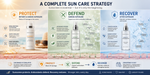
Step 1 — Cleanse
Remove unwanted surface material while respecting the skin or scalp barrier.
Step 2 — Treat
Apply concentrated or targeted leave-on actives.
Step 3 — Maintain
Use lightweight products to support hydration, antioxidant protection or scalp condition.
Step 4 — Protect
For exposed skin, use appropriate sun protection and environmental defence.
This creates a logical sequence:
Remove what you don't want → deliver what you do want → support the environment → protect the result.
The Key Takeaway
Rinse-off products are not ineffective.
They perform an essential function and, when properly designed, can provide genuine treatment benefits.
But many long-term cosmetic objectives require something different:
time.
Leave-on formulations provide prolonged contact, broad treatment opportunities and the ability to deliver active systems without immediately washing them away.
That is why modern skin and hair routines increasingly combine:
effective cleansing + targeted leave-on treatment
rather than expecting one product format to perform every function.
The future of advanced topical care is therefore not about abandoning rinse-off products.
It is about understanding what each formulation is designed to do — and giving active ingredients the appropriate environment and contact time to do it.